
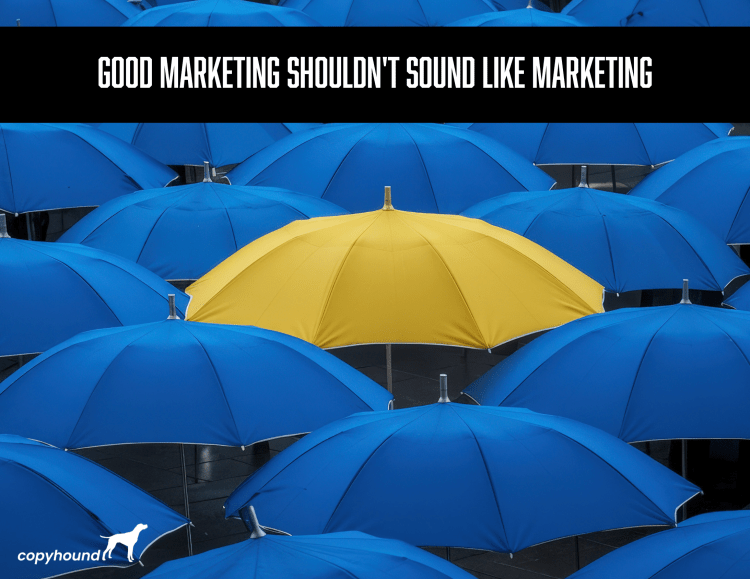
There’s a lot of bad B2B marketing copy out there. Like, a lot.
Everything (and I mean everything) in this guide boils down to one simple thought:
Put Yourself in Your Reader’s Shoes
This is a compilation of (pretentious) observations, lessons I’ve learned from other writing experts, and some gunslinger opinions on how to make B2B copy actually good.

Clarity Is the Most Important Thing in Marketing
A major sin writers commit in B2B marketing is thinking from the perspective of a writer:
“Are the words good?”
Instead, the most important part about writing really good copy is thinking from the perspective of the reader:
“Are the words clear?”
And when it comes to writing clearly, let’s jump right into the worst part about bad B2B writing.

Buzzwords Are Like Cigarettes in B2B Marketing
Everyone knows they’re bad for you. Writers. Designers. Account Managers. Even clients. Everyone.
Writers will chuckle about them: “Yeah, I know…” Even though they are harmful to the health of your writing, people still use them.
Stop Saying “Innovative Solutions”
How you think you look saying stuff like “innovative solutions”:

How you look to your reader:

Actually, this is how you look:

You Blend in Because You Sound Like Everyone Else.
Why do writers use buzzwords?
- People think the words sound fancy and smart.
They don’t.
Everybody (including you) complains about reading buzzword- and jargon-riddled copy.
“I have NO idea what this is saying.”
Write like you’re a reader.
2) People don’t truly understand the product or service.
Remember high school?
It’s the night before the big essay is due and you haven’t done your research, so you load up your Word doc with as much fluff as possible.
People who truly understand a topic don’t speak in vague platitudes and jargon.
They are clear and concise.

Be specific and be simple
Simple is powerful.
Why are buzzwords so hazardous to your writing?
Because other than making your copy unclear, buzzword-riddled writing sounds like marketing. That turns off your reader.
Learn everything you can about what you’re writing about. Find data points and proof statements. Then write really clear copy that speaks to the information your reader is looking for. Simple as that.
Beware of the “positive attribute overload”
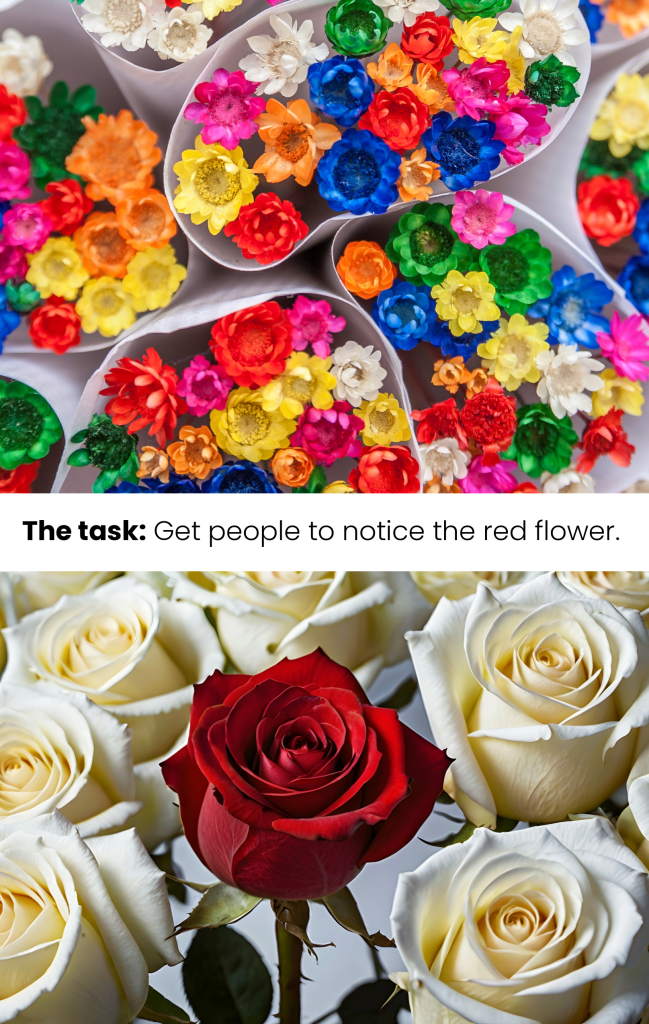
“Look at all these beautiful words! Look at them!“
Bad copy will cram in flowery language as an over-the-top positive attribute bouquet.
In good writing, one word (maybe a couple) should dominate a sentence.
What’s the point of the sentence?
That word is your red rose.
Simple language is used to make the impactful words impactful. When every word tries to sound impressive, readers get desensitized to it because it sounds like marketing – and they don’t know where they should be looking.
Beware the trap of Sell! Sell! Sell!
Some writers make the mistake of loading their copy with super salesy language because they must “win the reader over.”
The end result?
You talk about our great product, how badly you need it, we are really great, really! I know this is a blog and it’s the first time you’ve even seen anything from this brand, but reach out to us now so we can SELL TO YOU! (gurgling gasp)

Don’t write for you, write for your reader
Always Remember: Write Like You Are the Reader.
Do you like reading hard-to-follow copy filled with jargon? No? Then don’t write that way.
Do you roll your eyes reading copy with non-stop positive attributes? Yeah? Then don’t write that way.
Do you enjoy being aggressively sold to? No? Then don’t write that way.
If you want to stand out, here’s what you do:
Be clear. Be focused. Be helpful.
Jesse Severson is the Content Marketing Manager for DeanHouston, a B2B marketing agency that specializes in technical products and services. Wanna talk B2B content? Email him at jesse.severson@deanhouston.com.

 copyhound